 Chat with us

Call us now :08045478608
 Send Inquiry
 Send Inquiry
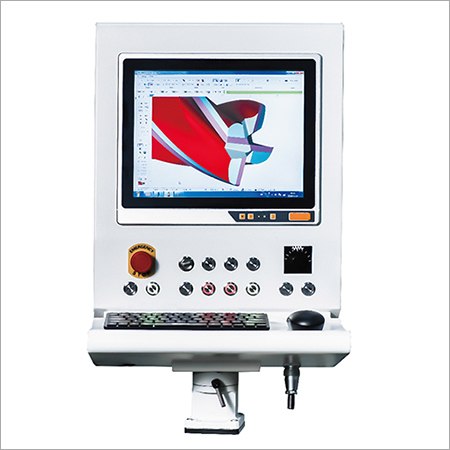
Programmable Multi Axis Controller
Price 2500000 INR/ Piece
MOQ : 1 Piece
Programmable Multi Axis Controller Specification
- Mounting Type
- Panel Mount
- Insulation Material
- High-grade Polymer
- Overheating Protection
- YES
- Feature
- Programmable, Multi Axis, Real-Time Control
- Surface Finish
- Matte
- Power Factor
- 0.98
- IP Rating
- IP20
- Efficiency
- High (>90%)
- Operating Temperature
- -10C to 50C
- Connector Type
- Industrial Terminal
- Humidity %
- 5% to 90% non-condensing
- Shape
- Rectangular
- Product Type
- Programmable Multi Axis Controller
- Application
- Industrial Automation, CNC Machines, Robotics
- Protection Level
- Overload & Short Circuit
- Frequency (MHz)
- 50/60 Hz
- Rated Voltage
- 220-240 V AC
- Energy Consumption
- Low Power Consumption
- Output Type
- Digital / Analog
- Color
- White & Blue
- Dimension (L*W*H)
- 160 x 110 x 65 mm
- Weight
- 470 g
- Phase
- Single Phase
- Size
- Standard
- Input Voltage
- 220-240 V AC
- Material
- ABS Plastic & Metal
- No Of Poles
- 4
- Connection Type
- Terminal Block
- Memory Capacity
- 128 KB User Program Memory
- Cycle Time
- <1 ms/step
- Relay Output
- Selectable 5A at 250V AC
- Cooling Method
- Passive (Natural Air Convection)
- Programming Language
- Ladder Diagram, Structured Text, Function Block
- Number of Axis Supported
- Up to 8 Axis
- Communication Interface
- RS232/RS485, Ethernet, USB
- Expansion Capability
- Modular with expansion slots
- Display Type
- Graphical LCD Display with Status LEDs
- Vibration Resistance
- IEC 60068-2-6 Compliant
- Input Type
- Digital and Analog inputs
- Control Method
- PLC-based programmable logic control
Programmable Multi Axis Controller Trade Information
- Minimum Order Quantity
- 1 Piece
- Supply Ability
- 100 Pieces Per Day
- Delivery Time
- 1 Week
Programmable Multi Axis Controller About
Programmable Multi-Axis Controller.
It is a family of high-performance servo motion controllers capable of commanding up to eight axes of motion simultaneously with a high level of sophistication.
There are five hardware versions of PMAC: the PMAC-PC, the PMAC-Lite, the PMAC-VME, the PMAC-STD and the Mini-PMAC. These cards differ from each other in their form factor, the nature of the bus interface, and in the availability of certain I/O ports. - Motorola's Digital Signal Processor (DSP) DSP56k is the CPU for PMAC, and it handles all the calculations for all eight axes. - The registers in PMAC's "DSPGATE" Gate-Array ICs are mapped into the memory space of PMAC's processor. Each DSPGATE contains four consecutively numbered channels; there may be up to 4 DSPGATEs in a PMAC system, for up to 16 channels. - There are two types of servo "DSPGATE" Gate-Array ICs: The PMAC(1) type that only allows the control of analog amplifiers with 10 Volts command signals and the PMAC2 type that is also capable of digital direct PWM or stepper command signals. - Each PMAC channel provided by a PMAC(1) DSPGATE has one DAC output, one encoder input and four dedicated flag inputs: two end-of-travel limits, one home input and one amplifier fault input. - Any PMAC can control up to eight motors or axis as long as enough channels are provided. Every PMAC contains one DSPGATE, which has channels 1 through 4 (Mini-PMAC has only two channels). If Option 1 is ordered (not available on PMAC-Lite or Mini-PMAC), a second DSPGATE is provided, which has channels 5 through 8. If Accessory 24 is ordered (not available on PMAC-STD), a third DSPGATE is provided, which has channels 9 through 12. If Accessory 24 Option 1 is ordered as well (not available on PMAC-STD), a fourth DSPGATE is provided, which has channels 13 through 16. - PMAC has its own memory and microprocessor. Therefore, any version of PMAC may run as a standalone controller or a host computer may command it either over a serial port or over a bus port.
Intuitive Multi-Axis Control
Experience seamless automation with support for up to 8 axes, enabling precise and flexible control over complex machinery. The graphical LCD display coupled with status LEDs ensures prompt monitoring and quick diagnostics, enhancing productivity in critical industrial and robotics applications.
Flexible Communication & Programming
Easily integrate the controller with different systems using RS232/RS485, Ethernet, and USB interfaces. Program with familiar IEC-standard languages: Ladder Diagram, Structured Text, and Function Block, supported by 128 KB of user-program memory for sophisticated automation logic.
Robust & Expandable Architecture
Built for industrial environments, the controllers passive cooling and ABS-metal construction guarantee reliability. Enjoy modular expansion slots for future scalability, and dependable protection features such as overload, short-circuit, and overheating safeguardsensuring operational continuity.
FAQs of Programmable Multi Axis Controller:
Q: How is the controller typically integrated into industrial automation systems?
A: The controller uses standard communication interfaces (RS232/RS485, Ethernet, USB) and terminal block connectors for streamlined integration with existing industrial automation and CNC machinery. Its PLC-based programming allows direct implementation into standard industrial workflows.Q: What programming languages does the controller support, and what are the benefits?
A: It supports Ladder Diagram, Structured Text, and Function Block languages per IEC standards. This flexibility empowers users to develop or modify control logic efficiently, leveraging widespread industry expertise and simplifying system upgrades or troubleshooting.Q: When should I consider expanding the controllers capabilities?
A: Expansion is recommended when your application demands control over additional axes, more I/O capacity, or integration with new hardware modules. Modular expansion slots make it simple to add functionality as your automation needs grow.Q: Where is this multi-axis controller best applied?
A: This controller is ideally suited for industrial automation settings, such as manufacturing plants, CNC machinery operations, and robotic systems, where multi-axis coordinated motion control and reliable real-time operation are essential.Q: What is the process for programming and configuring this controller?
A: Programming is typically done via PC-based software using any of the supported languages. User programs are uploaded via USB, Ethernet, or serial interface. The graphical LCD and status LEDs assist in monitoring progress and diagnosing errors during commissioning.Q: How does the controller ensure system reliability and safety?
A: It is built with overload, short circuit, and overheating protections. Compliance with IEC 60068-2-6 vibration standards and operation in a wide temperature/humidity range ensure durability and consistent performance.Q: What are the key usage and efficiency benefits of this controller?
A: Users benefit from rapid cycle times (<1 ms/step), high efficiency (>90%), low power consumption, and a robust, modular design. This ensures quick, reliable operation and the flexibility to scale as requirements evolve, ultimately reducing downtime and operational costs.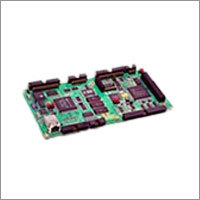
Tell us about your requirement

Price:
Quantity
Select Unit
- 50
- 100
- 200
- 250
- 500
- 1000+
Additional detail
Mobile number
Email

More Products in Electronics & Electrical Supplies Category
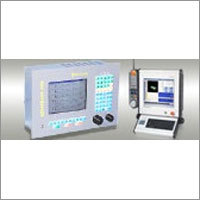
CNC Solution
Price 90000 INR / Piece
Minimum Order Quantity : 1 Piece
Product Type : CNC Solution Control Panel
Application : Industrial Automation, CNC Machine Control
Color : Grey
Frequency (MHz) : 50 Hz
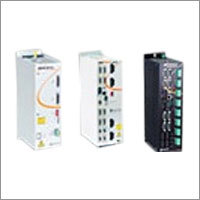
Integrated Controller Amplifiers
Price 80000 INR / Piece
Minimum Order Quantity : 1 Piece
Product Type : Integrated Controller Amplifier
Application : Industrial Automation, Process Control
Color : Black & Grey
Frequency (MHz) : 50/60 Hz
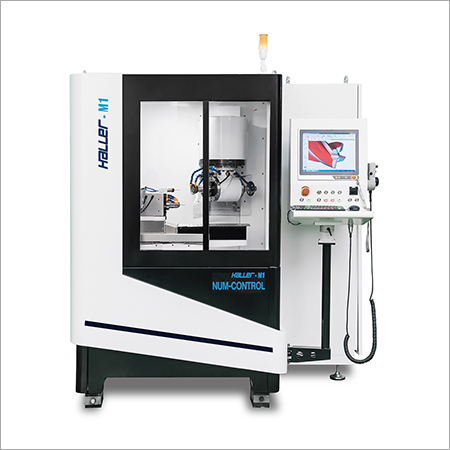
Halller M1 Num Control
Price 900 INR / Kilograms
Minimum Order Quantity : 12 Units
Product Type : Num Control
Application : 5 axis CMNC tool Grinding machine
Utility Control Panel
Price 900 INR / Piece
Minimum Order Quantity : 100 Pieces
Product Type : Utility Control Panel
Application : Industrial
Color : White
Frequency (MHz) : 50 Hertz (HZ)

 Send Inquiry
Our Products
- Aerosols
- Industrial Automation
- Electronics & Electrical Supplies
- Adhesives & Sealants Weicon
- 5 Axes Tool Grinding Software
- Weicon Wire Stripper
- OMRON Automation
- KEB Servo System
- CNC Tool Grinding Machine
- Stripping Tools
- Adhesive
- Epoxy Glue
- Epoxy Resin
- Sealent
- DC Drives
- KEB Drives
- WEICON Products
- Vector Controlled Drives
- Replacement Blade
- Aerosol Cleaner
- Servo Drive
- Measuring Instruments
- Industrial Optical Scales
- Digital Readouts
- Magnetic Transducer And Strip
- KEB Application Drives
- Geo Brick AC Drive
- KEB Elevator Drive
- CNC Walter Helitronic
- Search Light
- WEICON Technical Sprays
- Caulking Gun
- Mounting Tape
- Plastic Nozzles
- Primer Adhesive Applicator


No. 136-137/6, 8th Main, Third Phase, Peenya Industrial Area,Bengaluru - 560058, Karnataka, India

Mr Girish AN
(Proprietor)
Mobile :08045478608
 Send Inquiry
 Send SMS
 Call Me Free
Developed and Managed by Infocom Network Private Limited.


 English
 Spanish
 French
 German
 Italian
 Chinese (Simplified)
 Japanese
 Korean
 Arabic
 Portuguese