 Chat with us

Call us now :08045478608
 Send Inquiry
 Send Inquiry
Integrated Controller Amplifiers
Price 80000 INR/ Piece
MOQ : 1 Piece
Integrated Controller Amplifiers Specification
- Mounting Type
- DIN Rail Mount
- Surface Finish
- Powder Coated
- Insulation Material
- High Grade Insulation Material
- Humidity %
- 10% - 90% RH Non-Condensing
- Operating Temperature
- -10C to +50C
- Power Factor
- 0.98
- Efficiency
- 92%
- Overheating Protection
- YES
- IP Rating
- IP20
- Connector Type
- Screw Terminal
- Shape
- Rectangular
- Feature
- Integrated Control and Amplification, Compact Design, Easy Installation
- Product Type
- Integrated Controller Amplifier
- Application
- Industrial Automation, Process Control
- Protection Level
- IP20
- Frequency (MHz)
- 50/60 Hz
- Rated Voltage
- 220-240 V
- Energy Consumption
- Low Power Consumption
- Output Type
- Analog & Digital Outputs
- Color
- Black & Grey
- Dimension (L*W*H)
- 310 x 120 x 85 mm
- Weight
- 4.2 kg
- Size
- Standard
- Input Voltage
- 220 - 240 V AC
- Phase
- Single Phase
- No Of Poles
- Single Pole
- Connection Type
- Terminal Block
- Material
- ABS Plastic, Metal
- Communication Interface
- RS485/Modbus
- Response Time
- < 2 ms
- Control Mode
- Automatic/Manual Selectable
- Signal Type
- 4-20mA, 0-10V
- Display Type
- LED Status Indicators
- Output Power
- 80 W
- Vibration Resistance
- Yes
- Storage Temperature
- -20C to +70C
- Cooling Method
- Air Cooled
- Safety Standards
- Compliant with IEC 61010-1
Integrated Controller Amplifiers Trade Information
- Minimum Order Quantity
- 1 Piece
- Supply Ability
- 100 Pieces Per Day
- Delivery Time
- 1 Week
Integrated Controller Amplifiers About
The new Brick Motion Controller is an open architecture controller utilizing the intelligence and capability of its embedded Turbo PMAC2. With the ability to store programs locally and its built-in PLC execution, it is suitable for virtually any kind of automation application. This tried and tested architecture allows for complete machine motion and logic control.
This product has 4 or 8 (optional) axes of analog +/- 10V
fltered PWM (12-bit resolution) or pulse and direction outputs as standard. Options are available for dual true-DAC
analog outputs at 18-bit resolution or Direct-PWM with current loop. Feedback with quadrature incremental encoders
is standard. Options for sinusoidal, resolver or serial encoders are available.
BASE SPECIFICATIONS:
80 MHz DSP56303 CPU (120 MHz PMAC equivalent) (fast
internal memory for 1st 15 axes servo & commutation)
128k x 24 SRAM compiled/assembled program memory
(5C0) (for frmware, compiled PLCs, user-written servo &
phase)
128k x 24 SRAM user data memory (5C0) (for motion & uncompiled PLC progs, variables, tables, buers)
1M x 8 ash memory for user backup & frmware (5C0)
Fully confgurable via USB2.0 and Ethernet TCP/IP or RS-
232 port.
Fully confgurable via USB2.0 and Ethernet TCP/IP or
RS-232 port.Operation Standalone or PC
Linear and circular interpolation
256 motion program capacity
64 asynchronous PLC program capability
Rotating buffer for large programs
36-bit position range ( 64 billion counts)
Adjustable S-curve acceleration and deceleration
Set and change parameters in real time
Torque, Velocity and Position control standard
Eight thermal-fuse protected outputs (expandable to
16) rated for 0.5A @ 24VDC each (Flexible outputs
allow for sinking or sourcing of current depending on
whether the common emitter or common collector is
used, in banks of eight)
Primary encoder for each axis with TTL differential/
single-ended inputs with A, B quadrature channels and
C index channel, 10 MHz cycle rate, and digital Halleffect inputs
Advanced Control and Flexibility
With selectable automatic and manual control modes, this amplifier enables seamless adaptation to varying process requirements. Users can optimize operations for precision or custom intervention, increasing operational flexibility and overall productivity in industrial automation applications.
Reliable Performance in Demanding Environments
Built to meet IEC 61010-1 standards and featuring a high-grade thermal insulation material, this unit withstands challenging conditions. Its IP20 protection level, vibration resistance, and wide operating temperature range ensure uninterrupted operation, even in fluctuating industrial environments.
Efficient Communication and Monitoring
Integration with RS485/Modbus protocols guarantees dependable connectivity with existing automation systems. The LED status indicators and both analog and digital output signals allow users to monitor performance and system status at-a-glance, streamlining maintenance and troubleshooting.
FAQs of Integrated Controller Amplifiers:
Q: How is the Integrated Controller Amplifier installed in industrial settings?
A: Installation is straightforward using the DIN rail mounting and screw terminal blocks. The compact rectangular design allows for easy setup within standard industrial panels, supporting efficient wiring and minimizing installation time.Q: What benefits does the automatic/manual selectable control mode provide?
A: This feature lets users switch between automated responses for routine processes and manual intervention during custom or critical situations, enhancing operational efficiency and offering greater control over complex industrial automation tasks.Q: When should I use the RS485/Modbus communication interface?
A: Utilize RS485/Modbus when connecting the amplifier to centralized control or monitoring systems. This interface is ideal for multi-device networking, data exchange, and remote operation of industrial automation setups.Q: Where can this amplifier be used within industrial applications?
A: The amplifier suits applications in process control, machine automation, and system monitoring across various industries. Its robust build and versatile features make it ideal for use in manufacturing plants, production lines, and other automation environments.Q: What is the process for monitoring device performance and status?
A: Performance and system status can be monitored using the onboard LED status indicators, output signals (4-20mA, 0-10V), and digital communication through RS485/Modbus. These options allow for quick checks and real-time diagnostics.Q: How does the amplifier ensure safety and protection?
A: Compliance with IEC 61010-1 safety standards, IP20 protection level, overheating protection, and high-grade insulation materials safeguard personnel and equipment, minimizing risks associated with electrical and thermal hazards.Q: What efficiency and energy consumption advantages does the device offer?
A: The amplifier boasts a high efficiency rating (92%) and low power consumption, resulting in reduced operational costs and lower heat generation, which are essential for sustainable industrial automation.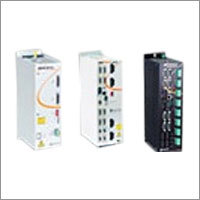
Tell us about your requirement

Price:
Quantity
Select Unit
- 50
- 100
- 200
- 250
- 500
- 1000+
Additional detail
Mobile number
Email

More Products in Electronics & Electrical Supplies Category
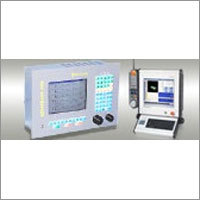
CNC Solution
Price 90000 INR / Piece
Minimum Order Quantity : 1 Piece
Product Type : CNC Solution Control Panel
Application : Industrial Automation, CNC Machine Control
Feature : Dust Proof, Overload Protection, Durable
Frequency (MHz) : 50 Hz
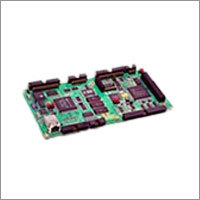
Programmable Multi Axis Controller
Price 2500000 INR / Piece
Minimum Order Quantity : 1 Piece
Product Type : Programmable Multi Axis Controller
Application : Industrial Automation, CNC Machines, Robotics
Feature : Programmable, Multi Axis, RealTime Control
Frequency (MHz) : 50/60 Hz
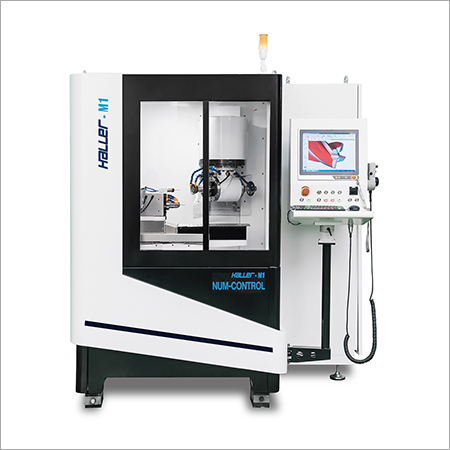
Halller M1 Num Control
Price 900 INR / Kilograms
Minimum Order Quantity : 12 Units
Product Type : Num Control
Application : 5 axis CMNC tool Grinding machine
Feature : Good Quality
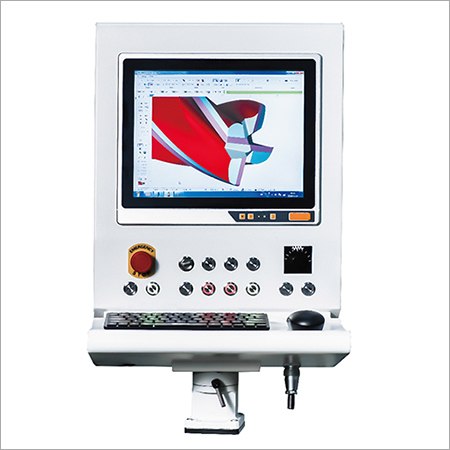
Utility Control Panel
Price 900 INR / Piece
Minimum Order Quantity : 100 Pieces
Product Type : Utility Control Panel
Application : Industrial
Frequency (MHz) : 50 Hertz (HZ)

 Send Inquiry
Our Products
- Aerosols
- Industrial Automation
- Electronics & Electrical Supplies
- Adhesives & Sealants Weicon
- 5 Axes Tool Grinding Software
- Weicon Wire Stripper
- OMRON Automation
- KEB Servo System
- CNC Tool Grinding Machine
- Stripping Tools
- Adhesive
- Epoxy Glue
- Epoxy Resin
- Sealent
- DC Drives
- KEB Drives
- WEICON Products
- Vector Controlled Drives
- Replacement Blade
- Aerosol Cleaner
- Servo Drive
- Measuring Instruments
- Industrial Optical Scales
- Digital Readouts
- Magnetic Transducer And Strip
- KEB Application Drives
- Geo Brick AC Drive
- KEB Elevator Drive
- CNC Walter Helitronic
- Search Light
- WEICON Technical Sprays
- Caulking Gun
- Mounting Tape
- Plastic Nozzles
- Primer Adhesive Applicator


No. 136-137/6, 8th Main, Third Phase, Peenya Industrial Area,Bengaluru - 560058, Karnataka, India

Mr Girish AN
(Proprietor)
Mobile :08045478608
 Send Inquiry
 Send SMS
 Call Me Free
Developed and Managed by Infocom Network Private Limited.


 English
 Spanish
 French
 German
 Italian
 Chinese (Simplified)
 Japanese
 Korean
 Arabic
 Portuguese