 Chat with us

Call us now :08045478608
 Send Inquiry
 Send Inquiry
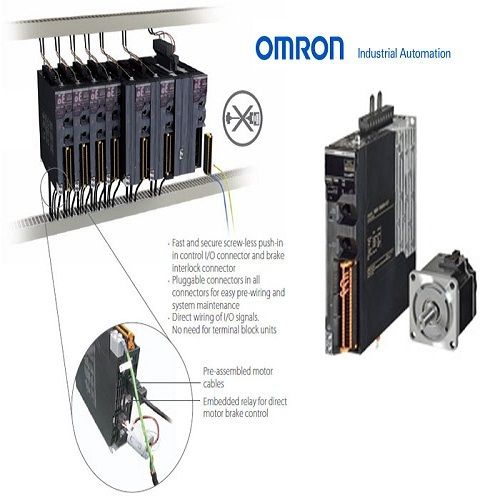
OMRON 1S Servo Drive
Price 90000-2500000 INR/ Unit
MOQ : 1 Unit
OMRON 1S Servo Drive Specification
- Processor Type
- High-Speed DSP
- Control Type
- Digital Servo Control (Position/Speed/Torque)
- Connectivity Type
- EtherCAT, EtherNet/IP, Pulse, Analog, IO, USB
- Frequency
- 50/60 Hz
- Speed Range
- Up to 6000 rpm
- Cable Length
- Customizable as per application
- IP Rating
- IP20
- Features
- Compact size, high precision, real-time auto-tuning, safety functions (STO), quick response
- Weight
- Approx. 1.2 kg - 7.5 kg (depending on model)
- Automation Grade
- Automatic
- Phase
- Single-phase/Three-phase (depending on model)
- Screen Size
- N/A (Module enclosure without display)
- Sensor Type
- Incremental/Absolute Encoder feedback
- Remote Control
- Yes
- Drive Type
- Servo Drive (AC)
- Load Capacity
- Up to 15 kW (dependent on selected model)
- Mounting Type
- Panel Mounted
- Application
- Precision motion control for industrial automation, packaging, assembly lines, robotics
- Material
- Industrial-grade electronic components and metal housing
- Power
- 400 W to 15 kW (model dependent)
- Temperature
- 0C to 55C (operating)
- Voltage
- 200-230 VAC; 380-480 VAC (model dependent)
- Feedback
- High-resolution Encoder Feedback
- Response Frequency
- Up to 3.1 kHz
- Ambient Humidity
- 10-90% RH (non-condensing)
- Compliance
- EN 61800-5-1, EN 61800-3
- Product Series
- 1S Series Servo Drive
- Safety Functions
- STO (Safe Torque Off), SS1 (Safe Stop 1)
- Cooling Method
- Natural Cooling / Fan Cooling
- Braking
- Built-in Regenerative Brake Circuit
- Programming Interface
- CX-Drive Software Support
- Display
- 7-segment LED status indication
- Protection
- Overcurrent, Overvoltage, Overheating
- Motor Compatibility
- OMRON 1S Servo Motors
OMRON 1S Servo Drive Trade Information
- Minimum Order Quantity
- 1 Unit
- Supply Ability
- 100 Units Per Day
- Delivery Time
- 1 Week
About OMRON 1S Servo Drive
Servo features
Power range from 50 W to 15 kW
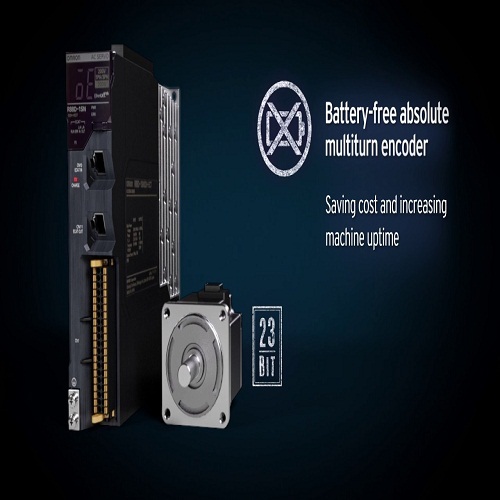
23 bit high resolution encoder
Battery-free absolute multi-turn encoder
Improved loop control for low overshoot and quick settling time
Safety function built-in:
Hardwired Safe Torque Off:
EN ISO 13849-1(Cat.3 PLe), EN61508(SIL3), EN62061(SIL3), EN61800-5-2(STO)
Safety over EtherCAT(FSoE):
EN ISO 13849-1(Cat.3 PLd), EN61508(SIL2), EN62061(SIL2), EN61800-5-2(STO)
Simplified machine design and maintenance
No battery, no maintenance
No need for homing sequence improving machine up time
3 bit high resolution encoder as standard
Absolute multi-turn encoder design without mechanics: 16 bits, 65536 turns
Compact and smaller motor size
Precision Motion Control for Industry
Engineered for applications requiring high accuracy and speed, the OMRON 1S Servo Drive delivers closed-loop performance with high-resolution encoder feedback. Its swift 3.1 kHz response frequency guarantees efficient and smooth operation in automated processes, accompanying a reliable regenerative brake circuit and intuitive 7-segment LED status display.
Comprehensive Safety and Protection
Safety is paramount with built-in Safe Torque Off (STO) and Safe Stop 1 (SS1) features, ensuring maximum operator and equipment protection. Overcurrent, overvoltage, and overheating protections extend the life and stability of the drive, while compliance with EN 61800-5-1 and EN 61800-3 ensures global application suitability.
Flexible Integration and Use
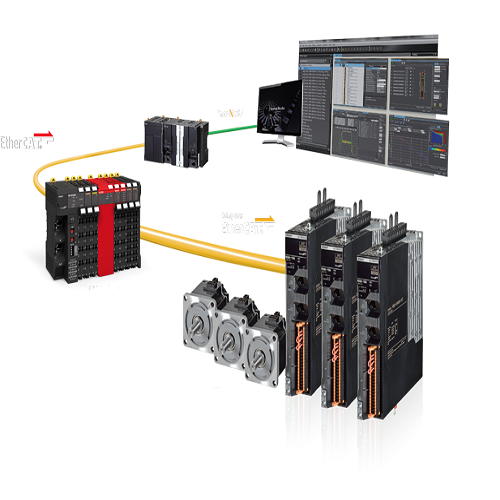
Supporting a variety of network protocolsEtherCAT, EtherNet/IP, Pulse, Analog, IO, and USBthe drive integrates seamlessly into modern factory settings. Programming and parameterization through CX-Drive software quicken setup and adjustment, while panel mounting and customizable cable lengths allow for easy placement in diverse applications.
FAQs of OMRON 1S Servo Drive:
Q: How do I set up and configure the OMRON 1S Servo Drive using CX-Drive software?
A: Setting up the OMRON 1S Servo Drive involves connecting the drive to your PC using the appropriate communication cable and launching the CX-Drive software. Through the software, you can perform parameter configuration, auto-tuning, and monitor drive status in real-time. The intuitive interface simplifies the process, making setup and adjustments efficient even for complex motion profiles.Q: What safety functions are included in the OMRON 1S Series Servo Drive, and why are they important?
A: The 1S Series Servo Drive includes STO (Safe Torque Off) and SS1 (Safe Stop 1) safety functions. These features are critical in industrial automation as they help protect both operators and equipment by safely removing torque or stopping the drive under hazardous conditions, in compliance with international safety standards.Q: When should I use the built-in regenerative brake circuit on the 1S Series Servo Drive?
A: The regenerative brake circuit is automatically engaged when the servo system decelerates or stops rapidly, converting excess kinetic energy into electrical energy. This feature is essential for applications requiring frequent acceleration and deceleration cycles, like robotics or packaging, as it enhances safety and prolongs drive lifespan.Q: Where can the OMRON 1S Servo Drive be installed for optimal performance?
A: Designed for panel mounting, the OMRON 1S Servo Drive can be installed in control cabinets within industrial environments. It accommodates ambient temperatures from 0C to 55C and ambient humidity from 10% to 90% RH (non-condensing), ensuring reliable operation in a wide range of factory settings.Q: What are the benefits of using high-resolution encoder feedback with the OMRON 1S Drive?
A: High-resolution encoder feedback provides precise position, speed, and torque monitoring, enabling accurate and responsive motion control. This is especially beneficial for applications demanding fine positioning, smooth operation, and minimal error, helping boost productivity and reduce maintenance needs.Q: How does the OMRON 1S Servo Drive support remote monitoring and control?
A: With connectivity options such as EtherCAT, EtherNet/IP, and USB, the drive allows for remote monitoring, diagnostics, and control from a central workstation. This facilitates predictive maintenance, reduces downtime, and enables integration with Industry 4.0 automation systems.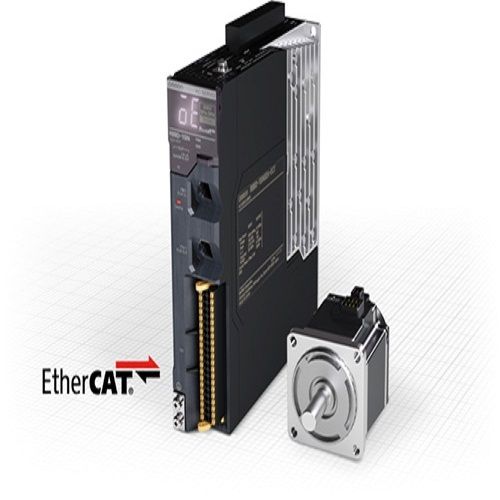

Tell us about your requirement

Price:
Quantity
Select Unit
- 50
- 100
- 200
- 250
- 500
- 1000+
Additional detail
Mobile number
Email

More Products in OMRON Automation Category
Omron Cp1e Plc
Price 90000-2500000 INR / Unit
Minimum Order Quantity : 1 Unit
Weight : Approx. 300g including base unit
Voltage : 24V DC
Speed Range : Programmable, up to 10K steps program capacity
Cable Length : Depends on I/O and communication cable, typically 2m standard
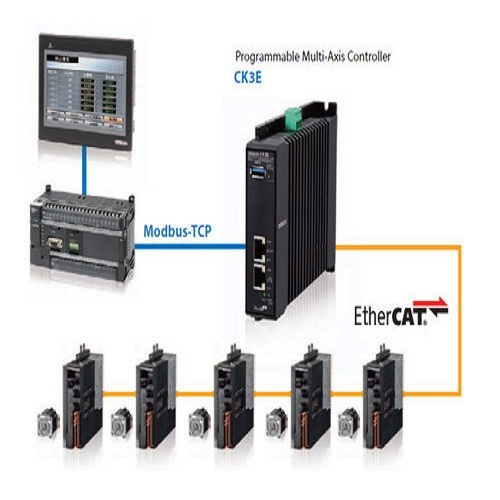
CK3E Motion Controller
Price 90000-2500000 INR / Unit
Minimum Order Quantity : 1 Unit
Weight : 540 Grams (g)
Voltage : 24 (20.4 to 26.4) Volt (v)

 Send Inquiry
Our Products
- Aerosols
- Industrial Automation
- Electronics & Electrical Supplies
- Adhesives & Sealants Weicon
- 5 Axes Tool Grinding Software
- Weicon Wire Stripper
- OMRON Automation
- KEB Servo System
- CNC Tool Grinding Machine
- Stripping Tools
- Adhesive
- Epoxy Glue
- Epoxy Resin
- Sealent
- DC Drives
- KEB Drives
- WEICON Products
- Vector Controlled Drives
- Replacement Blade
- Aerosol Cleaner
- Servo Drive
- Measuring Instruments
- Industrial Optical Scales
- Digital Readouts
- Magnetic Transducer And Strip
- KEB Application Drives
- Geo Brick AC Drive
- KEB Elevator Drive
- CNC Walter Helitronic
- Search Light
- WEICON Technical Sprays
- Caulking Gun
- Mounting Tape
- Plastic Nozzles
- Primer Adhesive Applicator


No. 136-137/6, 8th Main, Third Phase, Peenya Industrial Area,Bengaluru - 560058, Karnataka, India

Mr Girish
(Proprietor)
Mobile :08045478608
 Send Inquiry
 Send SMS
 Call Me Free
Developed and Managed by Infocom Network Private Limited.
